How Small a Hole Can a Mouse Fit Through?
The CDC says mice can fit through a hole the width of a pencil, about 1/4 inch. Rats need about 1/2 inch. Here is where those gaps hide in Wichita homes.
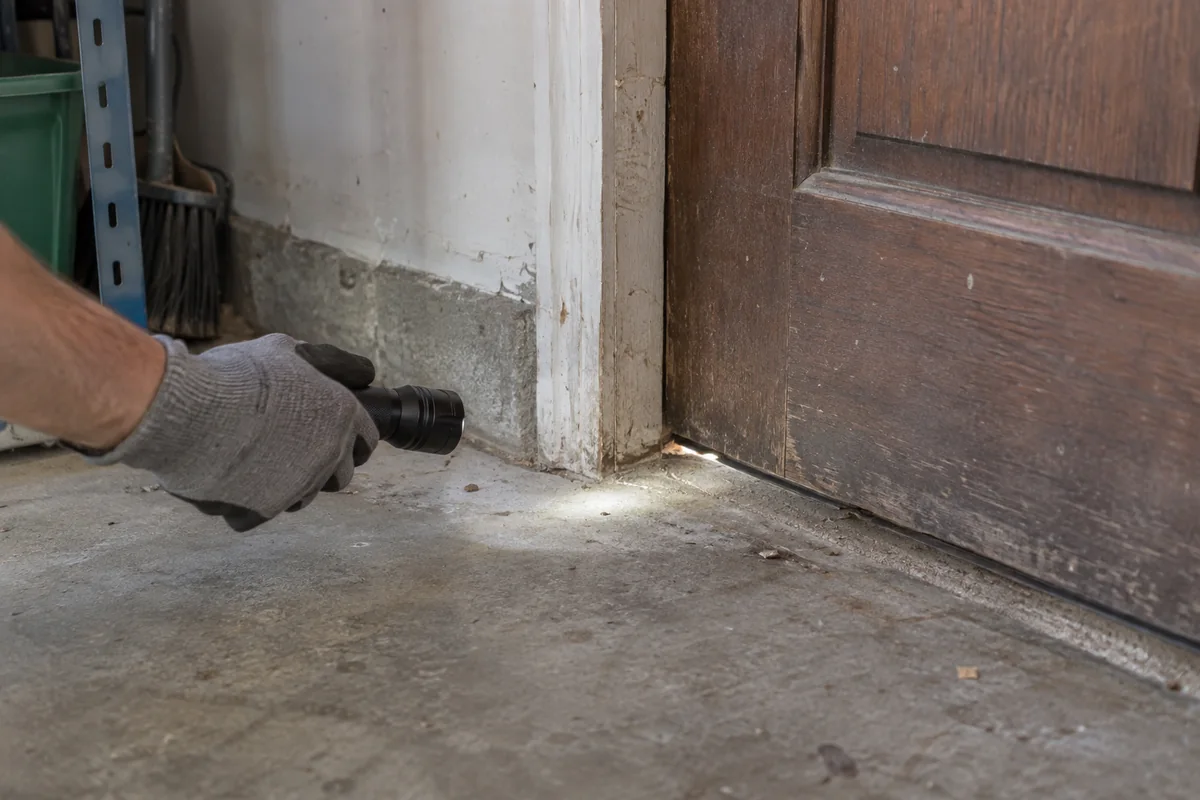
A mouse can fit through a hole about the width of a pencil. The CDC puts it at 1/4 inch, or about 6 millimeters. Young mice can squeeze through even less. Rats are bigger, but they still fit through a gap about 1/2 inch wide.
That is why sealing matters so much. Gaps that small are easy to miss, and most homes have many of them. This article covers where to look in a typical Wichita home and how to close what you find.
Why such small gaps work
A mouse's skull is the widest hard part of its body. If the head fits, the rest can usually follow. Mice also gnaw, so a gap that is a little too small can be chewed wider, especially in wood, plastic, foam or rubber.
A simple test: if a pencil fits in the gap, a mouse can likely get through. If your thumb fits, a rat can likely get through.
Where gaps hide outside
The CDC lists these places to check outside:
- Roof rafters, gables, eaves and soffits
- Windows and doors, especially those without weather stripping
- The gap between the foundation and the ground
- Attic and crawl space vents
- Holes for electrical, plumbing, cable and gas lines
In Wichita homes, add the bottom and sides of the garage door, the spot behind the AC unit where the line set enters, open weep holes in brick veneer, dryer vent flaps that do not close and crawl-space access doors.
Want a local rodent technician to look at it? Call to reach an independent provider serving Wichita. Same-day appointments are often available.
Where gaps hide inside
Inside, the CDC suggests checking:
- Under and behind kitchen cabinets
- Corners of closet floors
- Around the fireplace, windows and doors
- Behind appliances
- Around pipes under sinks and washers
- Pipes to water heaters and furnaces
- Floor vents and utility lines
- The attic, basement or crawl space
- Floor drains and joints where the floor meets the wall
Pull the stove and fridge out and look at the wall behind them. That is one of the most common entry points into a kitchen.
What to seal gaps with
The CDC recommends:
- Small holes: steel wool, held in place with caulk or spray foam
- Larger holes: lath screen, metal, cement, hardware cloth or metal sheeting
- Gaps along the foundation: caulk, plus flashing around the base of the house
Many technicians use copper mesh instead of steel wool outdoors because it does not rust. The steel wool versus copper mesh article compares them. Never seal furnace, water heater or dryer vents shut. Use guards made for vents.
A room-by-room check for Wichita homes
Walk the house with a flashlight and a pencil for testing gaps:
- Kitchen: behind the stove and fridge, under the sink, the dishwasher line and the gas line
- Laundry: behind the washer and dryer, the dryer vent and the water lines
- Garage: the bottom and sides of the big door, the side door, the door into the house and any lines through the walls
- Basement or crawl space: the sill plate, pipe and wire holes, window wells and the access door
- Attic: the eaves, gable vents and any spot where a lower roof meets a wall
- Outside: AC line sets, hose bibs, weep holes, cable and phone lines and settled steps
Mark each gap with painter's tape so you can come back with the right material.
Trap first, then seal
If mice are already inside, trap them before sealing so they are not shut inside walls or the attic. Once traps stay empty for several days, close the gaps.
For older homes with stone or brick foundations, two-story homes with roof-to-wall gaps or homes with crawl spaces, a professional exclusion job can find openings you may not see. See rodent exclusion.
Want a local rodent technician to look at it? Call to reach an independent provider serving Wichita. Same-day appointments are often available.
Questions Wichita readers ask
Can a mouse fit through a 1/4 inch gap?
Yes. The CDC says mice can fit through a hole the width of a pencil, about 1/4 inch or 6 millimeters.
How small a gap can a rat use?
Rats can fit through a gap about 1/2 inch wide, and they can gnaw small gaps wider.
Will caulk alone stop mice?
Not for long. Mice can chew through caulk and foam. Use steel wool or copper mesh in the gap with caulk to hold it in place.
Where do mice usually get into a house?
Common spots are under garage doors, around pipes and utility lines, at vents and crawl-space doors and behind appliances.
Do newer Wichita homes have these gaps too?
Yes. New homes often have gaps where AC lines and pipes enter, open weep holes in brick and garage door seals that wear quickly.
Sources
This page is general information, not legal or medical advice. Rules change, so check the linked sources for the current version.
Keep reading
Steel Wool vs. Copper Mesh for Sealing Mouse Holes
Both work for small gaps when packed tight and sealed in place. Steel wool is cheap and fine indoors. Copper mesh lasts longer outdoors and in damp spots.
Mice in the Walls: How to Tell and How to Get Them Out
Light scratching and scurrying inside walls at night usually means mice. They get in where pipes and wires pass through, and they come out to feed. Trap at those exits, then seal.
Do Rodent Repellents Work? Peppermint, Ultrasonic and More
Repellents may make a spot less pleasant for a while, but none reliably keep mice or rats out. Removing food, trapping and sealing gaps work better.