Rats and Mice in the Garage and Car Engine
Garages hold seed, pet food and quiet corners, and parked cars offer warm engines and wiring to chew. Here is how to spot trouble, clean up safely and keep rodents out.
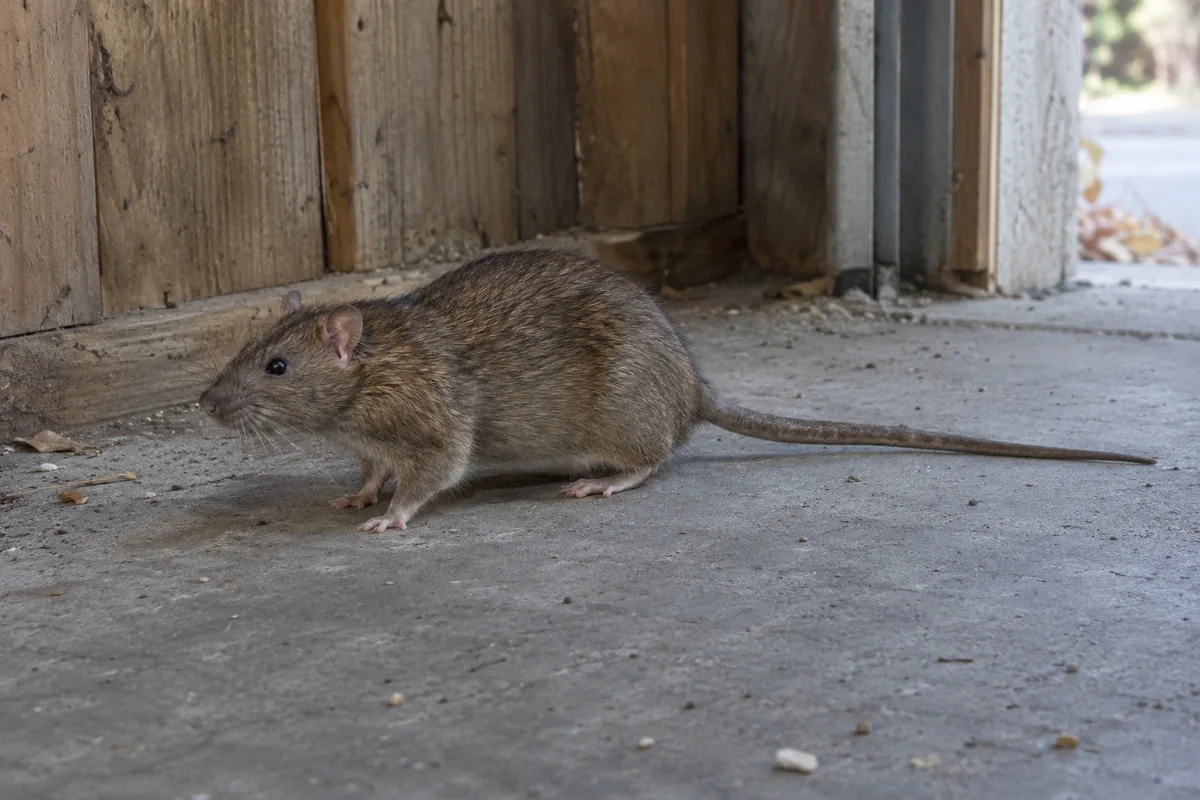
Garages are where most Wichita rodent problems start. They hold birdseed, grass seed, pet food and cardboard, they are quiet at night, and the door is often open or poorly sealed. Once rodents settle in, a parked car is an easy next step: a warm engine bay, a sheltered air filter housing and wiring to chew.
This article covers how rodents get into garages, how to tell if they have been in your car and how to clean up and keep them out.
How rodents get into the garage
The garage door is the main way in. Common gaps:
- A worn or torn bottom seal
- Gaps at the side stops and top of the door
- A side door without a sweep
- Gaps where utility lines enter the garage wall
- Holes chewed through the corner of the door seal
Stand inside the closed garage in daylight. Any light you see at the bottom or sides is a gap a mouse can likely use. Rats need about 1/2 inch, mice about 1/4 inch.
A door left open for an evening in the fall is often enough for a rat to walk in.
Signs rodents are in your car
Check your car if it sits for days at a time, especially in late fall and winter:
- Nesting material such as shredded paper, insulation, leaves or fabric in the engine bay, air filter housing or cabin air filter
- Droppings on the engine cover, battery or in the trunk
- Chewed wiring, hoses or insulation under the hood
- A musty or burning smell when the heater runs
- Warning lights or electrical problems after the car has sat
Chewed wiring can be expensive to repair. Have a mechanic check the car if you see damage.
Want a local rodent technician to look at it? Call to reach an independent provider serving Wichita. Same-day appointments are often available.
Cleaning a nest out of a car
The CDC has specific advice for vehicles: open the hood, doors and trunk and let the car air out for 20 minutes before cleaning. Then:
- Wear rubber or plastic gloves
- Soak nests and droppings with disinfectant and wait 5 minutes or the label time
- Remove the material in a plastic bag, then double-bag it
- Replace a contaminated cabin air filter
- Wash gloved hands, remove gloves, then wash your hands
Do not use a shop vacuum or air compressor on nests or droppings. That can spread germs into the air.
Keeping rodents out of the garage
- Replace the garage door bottom seal with one made to resist chewing, and fix the side seals
- Add a sweep to the side door and the door into the house
- Store birdseed, grass seed and pet food in metal or hard plastic bins with lids
- Get boxes off the floor onto metal shelves, away from walls
- Keep the garage door closed in the evening
- Set snap traps along the walls behind shelves, out of reach of kids and pets
If rats are coming from the yard, burrows outside need attention too. The garage and basement rodent control page covers what a provider does.
Want a local rodent technician to look at it? Call to reach an independent provider serving Wichita. Same-day appointments are often available.
Why fall is the busy season
In Wichita, garages see the most rodent activity in fall and early winter. Field mice move toward buildings as crops are harvested around the metro and nights turn cold, and a garage is the first warm spot they reach. Cars that sit while owners travel for the holidays are especially easy targets.
The seasonal rodent article explains what to do each season.
If rats are coming from the yard
Mice usually wander into a garage on their own. Rats often come from a burrow outside. If you find large droppings in the garage, walk the outside walls and look for holes 2 to 4 inches wide under the slab edge, along the driveway and beside the side door.
Detached garages along alleys, common in older Wichita neighborhoods, are especially prone to this. Burrows under the slab can lead straight inside through cracks or gaps at the base of the walls. Treating those burrows and closing the gaps at the base of the garage matters as much as setting traps inside. See rat burrow treatment.
Questions Wichita readers ask
Why do rodents chew car wires?
Rodents gnaw constantly to keep their teeth worn down, and engine bays give them a warm, sheltered spot to nest. Wiring and hoses are easy to chew.
Do repellents keep rodents out of cars?
Results vary, and none are a reliable fix. Keeping rodents out of the garage, removing food and using the car often work better.
How should I clean droppings from my car?
Air the car out for 20 minutes with the hood, doors and trunk open, wear gloves, soak droppings with disinfectant, wait, then wipe them up and bag them.
What garage door seal keeps mice out?
Look for bottom and side seals made to resist chewing, often reinforced with metal. A plain rubber seal wears and can be chewed through.
Sources
This page is general information, not legal or medical advice. Rules change, so check the linked sources for the current version.
Keep reading
Seasonal Rodent Problems in Wichita: A Year-Round Guide
Fall brings field mice in from the harvest. Winter keeps them in garages and walls. Spring brings burrows and nests. Summer is the time to seal. Here is what to do each season.
How Small a Hole Can a Mouse Fit Through?
The CDC says mice can fit through a hole the width of a pencil, about 1/4 inch. Rats need about 1/2 inch. Here is where those gaps hide in Wichita homes.
Do Rodent Repellents Work? Peppermint, Ultrasonic and More
Repellents may make a spot less pleasant for a while, but none reliably keep mice or rats out. Removing food, trapping and sealing gaps work better.