Mouse Droppings: What They Look Like and How to Clean Them Up
Mouse droppings are 1/8 to 1/4 inch long, like a grain of rice with pointed ends. Here is how to identify them, read what they mean and clean them up without sweeping.
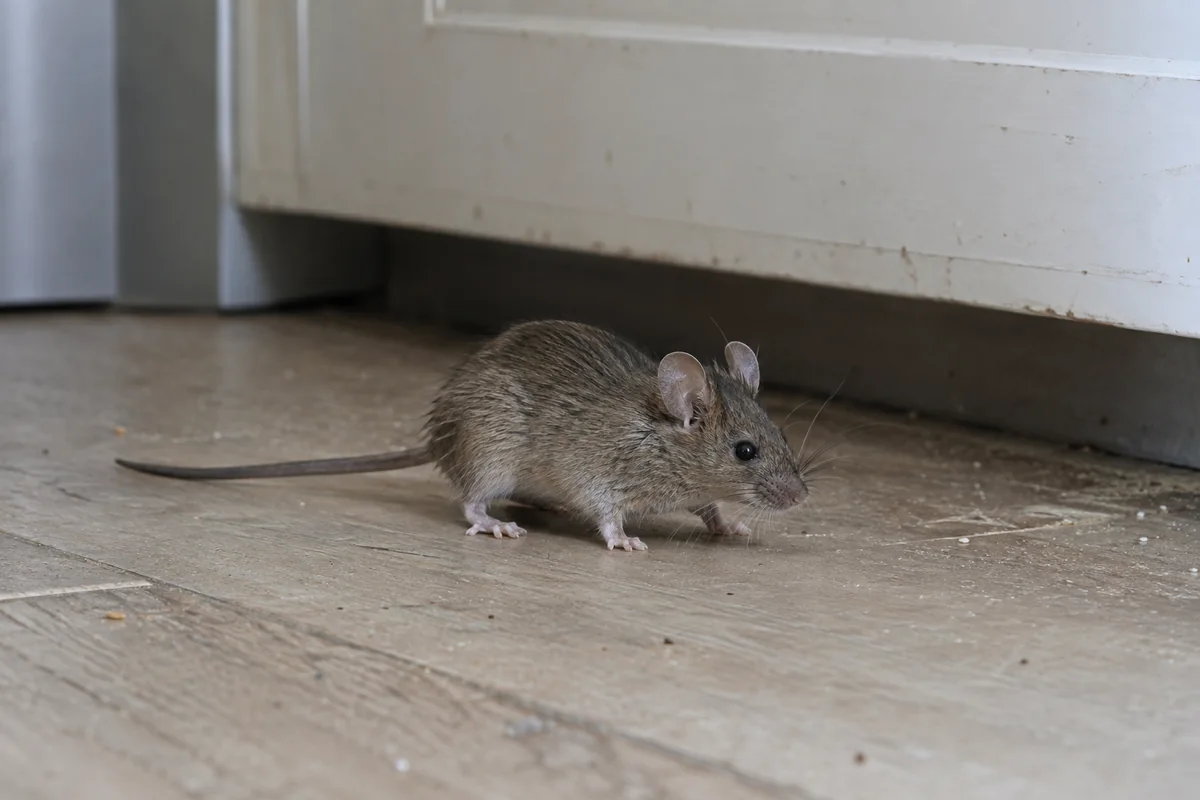
Mouse droppings are small, about 1/8 to 1/4 inch long, dark and shaped like a grain of rice with pointed ends. They are usually scattered rather than piled, because mice drop them as they move. If you find them in a kitchen drawer, under the sink or along a baseboard, you very likely have mice.
In Wichita, mouse droppings show up most often in fall and winter, when field mice move indoors. Here is how to identify them, figure out what they mean and clean them up safely.
What mouse droppings look like
Look for:
- Size: 1/8 to 1/4 inch long
- Shape: thin, like a grain of rice, pointed at one or both ends
- Color: dark brown to black when fresh, turning gray and dry with age
- Pattern: scattered along walls, in drawers and cabinets, rather than in a pile
Rat droppings are much larger, about 1/2 to 3/4 inch, with blunt ends. Cockroach droppings are smaller specks or smears. Bat droppings crumble into powder.
Where to look
Mice nest close to food and move along walls. Check:
- Kitchen drawers, the pantry and cabinets under the sink
- Behind and under the stove, fridge and dishwasher
- Along baseboards and in closet corners
- In the garage, especially near birdseed, grass seed and pet food
- In attic insulation near the eaves
- In stored boxes in basements, sheds and garages
Droppings in several rooms usually mean several mice, since mice breed quickly.
Want a local rodent technician to look at it? Call to reach an independent provider serving Wichita. Same-day appointments are often available.
House mouse or deer mouse
You cannot tell house mouse droppings from deer mouse droppings by eye. Where you find them helps. House mice live close to people, often in kitchens. Deer mice, with white bellies and two-tone tails, live in fields and fence rows and move into garages, sheds, cabins and homes near open land.
That matters around Wichita because deer mice are the main carrier of the hantavirus that causes hantavirus pulmonary syndrome. The Kansas Department of Health and Environment says cases in Kansas are sporadic, 0 to 2 a year, and mostly come from exposure in the western half of the state. Risk is low, but careful cleanup matters most in sheds, barns and closed buildings on the rural edges of the metro.
Other signs that travel with droppings
Droppings rarely show up alone. Look nearby for:
- Small, greasy smudges along baseboards or the edges of holes, where mice rub as they run
- Tiny gnaw marks on food packaging, soap, candles or the corners of cabinets
- Shredded paper, fabric or insulation balled up as nesting material
- A sharp, musty smell in a closed cabinet or closet, from mouse urine
These signs help you find the route mice use and the spot where they come into the room, which is where traps and sealing do the most good.
How to clean up mouse droppings
The CDC method:
- Air out closed sheds, garages or cabins for 30 minutes before cleaning
- Wear rubber or plastic gloves
- Soak droppings with disinfectant or a fresh mix of 1.5 cups bleach in 1 gallon of water
- Wait 5 minutes or the label time
- Wipe up with paper towels and bag them in a covered trash can
- Disinfect the surface
- Wash gloved hands, remove gloves, then wash your hands
Never sweep, vacuum or use a leaf blower on droppings. Throw away food that mice may have touched. For heavy contamination in an attic or crawl space, see attic and crawl space cleanup.
What to do after cleanup
Cleanup without control just resets the clock. Set snap traps along walls where you found droppings, with the bait end against the wall. Then find and seal the gaps mice used, which can be as small as 1/4 inch.
The mouse control page covers what a provider does, and the hole size article shows where to look.
Want a local rodent technician to look at it? Call to reach an independent provider serving Wichita. Same-day appointments are often available.
Questions Wichita readers ask
How many mice do I have if I find droppings?
There is no exact count from droppings. Droppings in several rooms or fresh ones every day usually mean more than one mouse.
Are mouse droppings dangerous?
Mouse droppings, urine and nests can carry germs. Deer mice can carry hantavirus. Clean them by soaking with disinfectant first, never by sweeping or vacuuming.
Can I tell deer mouse droppings from house mouse droppings?
Not reliably by sight. Location helps: deer mice are more common in sheds, garages and homes near open land.
What should I do with food that mice got into?
Throw it away. Mice can contaminate food with droppings and urine.
Sources
- CDC: How to Clean Up After Rodents
- CDC: About Hantavirus
- KDHE: Kansas Health Alert Network update on hantavirus, May 2026
This page is general information, not legal or medical advice. Rules change, so check the linked sources for the current version.
Keep reading
Rat Droppings: How to Identify Them and What to Do
Rat droppings are about 1/2 to 3/4 inch long with blunt ends. Here is how to tell them from mouse droppings, judge whether they are fresh and clean them up safely.
Rodent Diseases in Kansas: Hantavirus, Leptospirosis and Rat-Bite Fever
Hantavirus is present in Kansas but rare, with 0 to 2 cases a year. Leptospirosis and rat-bite fever also come from rodents. Safe cleanup and quick medical care are the main defenses.
Mice in the Walls: How to Tell and How to Get Them Out
Light scratching and scurrying inside walls at night usually means mice. They get in where pipes and wires pass through, and they come out to feed. Trap at those exits, then seal.